
Peter’s Uneasy Fatherhood
Nieuwe burenThis flow traces Peter’s effort to claim a paternal bond with Lieve, his complicated grief after her death, and the final moment when a surviving child gives him a reason to remain alive.
increasing Bearing strength in each event
 decreasing
Bearing strength in each eventdecreasingThe Promise of a Family
The Promise of a Family
Peter’s Loneliness
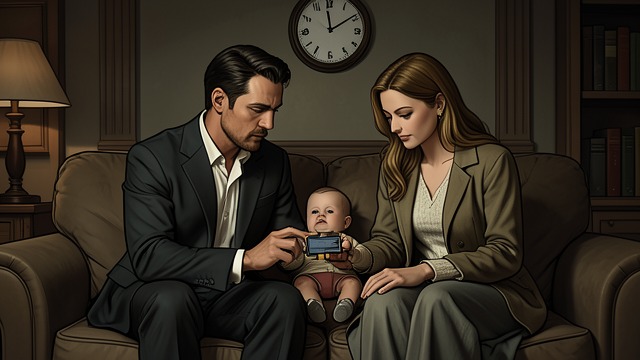
After Peter loses both parents, he tells Eva that he feels like an orphan and wishes he had a sibling who shared his memories. Eva answers by promising to give him a family of his own.
Peter agrees to try for children, though he is uncertain whether fatherhood itself is his deepest desire. What he knows is that he wants to stay with Eva. The prospect of a child becomes a promise of belonging and a future they can build together.
A Fragile Expectation
As attempts at conception continue, Peter’s hope increasingly attaches to being able to father a child. His infertility makes that hope feel like a test of both his body and his place in the marriage.
When donor conception becomes the path to pregnancy, Peter faces a difficult emotional distinction: he has wanted a family with Eva, but the child will not be genetically his. His willingness to continue does not erase that tension, and it leaves him vulnerable to feeling that his claim to fatherhood is conditional.
Meeting Lieve
Meeting Lieve
A Father at the Operating Table
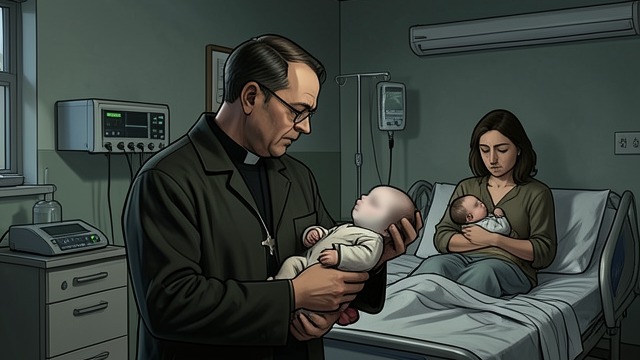
Peter accompanies Eva through the emergency operation that follows her severe bleeding. He is frightened, powerless, and focused on the child they have tried so hard to have.
When Lieve is delivered stillborn, Peter sees the daughter he has imagined but cannot welcome into a life with them. He stays beside Eva and shares the intimate work of dressing and holding the baby, learning her features alongside his wife.
A Bond in Brief
Peter remembers Lieve as their daughter even while acknowledging that a donor supplied the sperm. The absence of a genetic connection does not prevent affection, but it makes his later grief more complicated than Eva’s and exposes an insecurity he would rather conceal.
The family takes Lieve home and buries her. In those hours Peter participates as a father, but the relationship has no time to grow through ordinary care. Its emotional weight comes instead from what the couple hoped to share and what they lost together.
Grieving from the Margins
Grieving from the Margins
A Different Kind of Loss
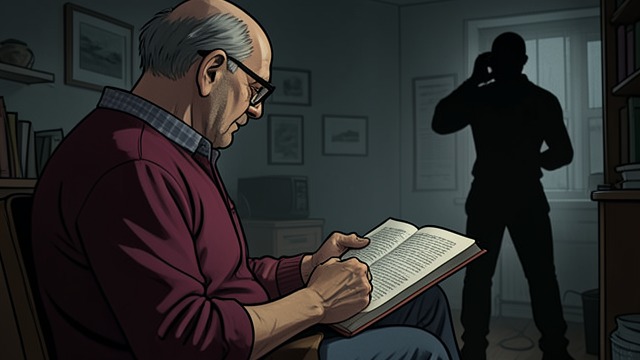
Peter mourns Lieve but does not experience the physical continuity that Eva describes. He did not carry the pregnancy, and the child was conceived with donor sperm; those facts make him feel that his grief is less legitimate and his paternal bond less secure.
Rather than show his sadness in therapy or at the grave, Peter often withdraws into practical tasks and silence. He tells himself that Eva has greater claim to grief and that he should protect her from his own feelings.
The Cost of Silence
His restraint does not spare Eva pain. She reads his avoidance as evidence that he does not care as much as she does, while he interprets her intense attachment as a reminder that he can never be the father she wanted.
Peter’s grief consequently moves through shame, jealousy, and self-blame as well as sorrow. He resents the donor’s biological role and struggles to love Lieve without feeling that his place in the family was never fully his. That unresolved grief later makes conversations about another child especially charged.
A Farewell He Can Barely Speak
A Farewell He Can Barely Speak
Joining Eva’s Ritual
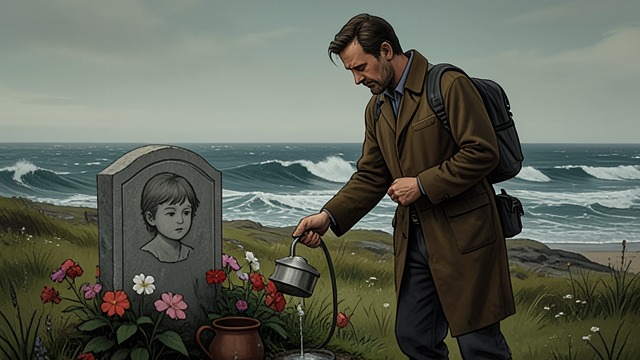
Peter accompanies Eva to the grave on the first anniversary. He waters the flowers and tries to address Lieve, though speaking to a stone feels formal and unreal to him.
As Eva says she will let Lieve go, Peter remembers the day of the emergency: the blood, the hospital delays, the operation, and the moment he saw his daughter. The memory gives his grief concrete force, even though he finds it difficult to express the bond in Eva’s spiritual language.
A Shared Walk Away
Peter does not tell Eva that he believes Lieve’s soul has become an angel. He stays beside her and accepts the farewell as an act that matters to her, even when it does not give him the same consolation.
Afterward, they leave the grave holding hands and walk to the beach. This is one of their last moments of outward unity. Peter feels lighter, but the difference between his inward grief and Eva’s continuing motherhood remains unresolved beneath the gesture.
The Child Who Survives
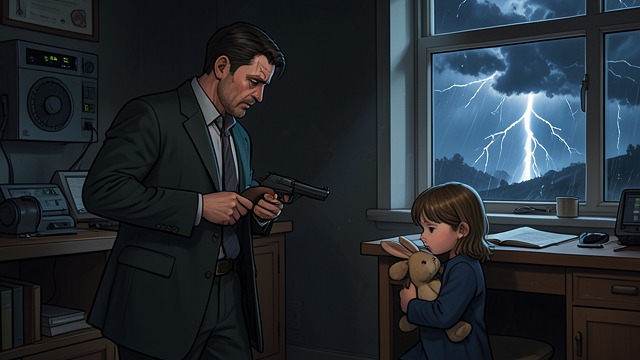
The Child Who Survives
Violence and Recognition
During the armed confrontation at the cottage, Peter shoots Steef, Rebecca, and Eva. The room becomes silent only after the people he came to reclaim are dead, and Peter’s violence leaves no possibility of restoring his family.
As he collapses, Peter turns the gun toward himself but finds that he cannot complete the act. He hears a child crying from beneath the kitchen counter and sees Sem clutching a stuffed rabbit.
A Paternal Duty After Catastrophe
The sight of Sem breaks through Peter’s delusions and forces him to recognize what he has done. He understands that the child has witnessed the murders and that he is now the person who must answer for them.
Peter reaches toward Sem and apologizes. He decides, however weakly, to live so that the surviving child will not be abandoned to the immediate aftermath. Fatherhood returns not as the family life Peter once imagined with Eva, but as a burden of responsibility toward a frightened child whose parents are dead.
After the deaths of Peter’s parents
During Lieve’s delivery and first hours
During the months after Lieve’s burial
At Lieve’s grave on the first anniversary
Immediately after the shooting at the holiday cottage
